Abstract Yellow Flowers Watercolor: Integrating Artistic Assets into Professional Workflows
In the landscape of digital design and creative entrepreneurship, the selection of visual assets is rarely just an aesthetic choice; it is a strategic decision that impacts workflow efficiency, brand consistency, and final output quality. The Abstract Yellow Flowers Watercolor collection represents a specific type of resource designed to bridge the gap between high-end artistic appeal and practical usability. For professionals ranging from graphic designers to small business owners, understanding how to integrate these assets effectively can streamline production timelines while elevating the perceived value of their projects.
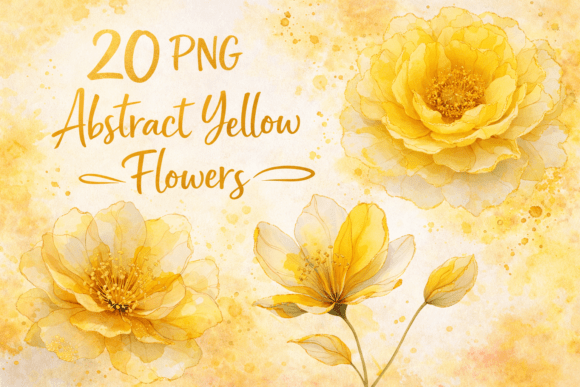
This bundle, comprising 20 high-quality PNG files with transparent backgrounds, serves as a versatile component in various creative pipelines. Whether you are developing branding materials for a wellness startup, designing wedding stationery, or creating sublimation prints for retail products, the utility of these watercolor elements lies in their adaptability. This article explores the practical implementation of abstract yellow floral designs, focusing on preparation, integration techniques, and quality control measures that ensure professional results.
Understanding the Asset Structure and Compatibility
Before integrating any digital asset into a project, it is crucial to understand its technical specifications. The Abstract Yellow Flowers Watercolor files are provided in PNG format with transparent backgrounds. This specific format is critical for modern design workflows because it allows for seamless layering without the need for complex masking or background removal tools.
The transparency ensures that these floral elements can be placed over any color, texture, or photograph without visual conflict. For users working in software such as Adobe Photoshop, Illustrator, Canva, or Procreate, this means immediate drag-and-drop functionality. The "abstract" nature of the designs further enhances compatibility. Unlike rigid, realistic botanical illustrations that may clash with certain typography or layout styles, abstract watercolor forms offer organic shapes that complement both minimalist and maximalist design approaches. This flexibility reduces the time spent searching for the "perfect" fit, allowing creators to focus on composition and messaging.
Strategic Placement in the Design Process
Integrating watercolor assets requires a thoughtful approach to layering and hierarchy. In a typical design workflow, these elements should not be treated as afterthoughts but as foundational components that influence the overall balance of the piece. Here is how to position these assets effectively during different stages of creation:
- Background Establishment: Use larger, softer floral elements to create subtle textures behind text. This adds depth without compromising readability, particularly useful for invitations and greeting cards.
- Focal Point Enhancement: Place more detailed or vibrant yellow blooms near key information, such as a logo or a call-to-action button, to draw the viewer’s eye naturally through the layout.
- Frame Construction: Combine multiple abstract flowers to create organic borders for social media posts or printable art. This technique works exceptionally well for branding materials where a cohesive visual identity is required.
When using these assets for sublimation or print-on-demand products like tumblers and t-shirts, consider the scale and resolution early in the process. Since the files are high-quality PNGs, they maintain clarity when resized within reasonable limits. However, always preview your design at actual size to ensure that the delicate watercolor edges do not pixelate or lose their softness during the printing phase.
Application Across Diverse Industries and Projects
The versatility of the Abstract Yellow Flowers Watercolor bundle allows it to serve multiple industries. Understanding the specific requirements of each application helps in tailoring the usage of these assets for maximum impact.
Branding and Marketing Materials
For entrepreneurs and marketers, consistency is key. Yellow is a color associated with optimism, energy, and warmth. Using abstract yellow flowers in branding materials—such as business cards, letterheads, and social media graphics—can evoke these emotions subtly. When implementing these assets, ensure that the yellow tones harmonize with your existing brand palette. You may need to adjust the opacity or apply color overlays in your design software to match specific hex codes, ensuring brand uniformity across all touchpoints.
Wedding and Event Stationery
In the realm of event planning, particularly weddings, watercolor florals are a staple. The abstract nature of this collection offers a modern twist on traditional floral motifs. Designers can use these elements to create elegant save-the-dates, menus, and place cards. The transparent background feature is invaluable here, allowing for easy placement over textured paper simulations or colored cardstock backgrounds. To maintain a sophisticated look, pair these bright yellow elements with neutral typography and ample white space.
Sublimation and Product Design
For creators involved in physical product manufacturing, such as junk journals, stickers, or apparel, the workflow differs slightly. Here, the focus shifts to file preparation for printing. Ensure that your design software is set to the correct color profile (usually CMYK for print, though many sublimation printers work well with sRGB if managed correctly). Test prints are essential to verify that the vibrant yellow hues translate accurately onto the substrate. These abstract designs are particularly effective on white or light-colored items, where the watercolor effect can shine without being muted by dark fabrics.
Workflow Efficiency and Organization Tips
Managing digital assets efficiently is as important as the design itself. To maximize the utility of the 20 PNG files included in this bundle, consider implementing a structured organization system. Create a dedicated folder for "Floral Assets" and subfolders for specific projects. Rename files descriptively if necessary, although keeping the original filenames can help track versions.
Furthermore, build a library of pre-made compositions. Save common arrangements of these yellow flowers as templates or smart objects in your design software. This practice allows for rapid deployment in future projects, significantly reducing turnaround time for clients or personal tasks. For example, a pre-assembled corner flourish can be reused across multiple invitation designs, requiring only minor adjustments to color or scale.
Quality Control and Final Output Considerations
Before finalizing any project featuring Abstract Yellow Flowers Watercolor, perform a rigorous quality check. Zoom in to 100% to inspect the edges of the flowers. The watercolor style should exhibit soft, natural bleeding effects, not jagged or pixelated lines. If you notice any degradation, it may indicate that the image has been scaled up beyond its optimal resolution.
Additionally, consider the context in which the final product will be viewed. Digital displays emit light, making colors appear brighter, while printed materials reflect light, which can mute tones. Adjust brightness and contrast accordingly. For digital use, ensure that the transparent backgrounds remain clean and free of accidental artifacts. For print, verify that the yellow ink density is sufficient to convey the vibrancy intended by the watercolor style.
By treating these digital assets as integral components of a broader creative strategy, professionals can enhance both the aesthetic quality and operational efficiency of their work. The Abstract Yellow Flowers Watercolor bundle is not merely a collection of images; it is a tool that, when used with intention and technical precision, can elevate diverse projects from concept to completion with grace and professionalism.